
Composite decking has become one of the most popular choices in Ottawa backyards, and for good reason. It resists splintering, rot, and staining, and it never needs the annual sanding and staining that wood demands. But low-maintenance does not mean no-maintenance, and Ottawa winters ask a lot of any outdoor surface. Knowing what your composite deck actually needs, and what it emphatically does not, keeps it looking new for decades.
At Ben Ozorak Construction & Design, we build decks in every material and help homeowners care for them the right way. A quality composite deck ottawa installation is designed to shrug off our climate, but a few simple seasonal habits protect that investment and prevent the small problems that shorten a deck’s life.
Why Composite Is Low-Maintenance to Begin With
Understanding how composite is made explains why it needs so little upkeep. Composite boards combine wood fibres with recycled plastic, and in most modern products that core is wrapped in a protective polymer shell. This construction is what gives composite its resistance to splintering, rot, and stains, the wood fibres are sealed away from moisture, so the board does not absorb water the way natural wood does.
This is the key difference from a wood deck. A deck materials ottawa comparison makes it clear: wood is porous and needs a protective finish to survive, while composite arrives with that protection built in. That single fact drives everything about how you care for the two surfaces differently, and it is the reason the maintenance routine is so much simpler.
The One Thing You Should Not Do: Sealing
Here is where a great deal of well-meaning advice goes wrong. Because homeowners are used to sealing and staining wood decks, many assume composite needs the same treatment. It does not, and applying a sealer can actually cause problems.
Composite decking should not be sealed or stained, for several concrete reasons:
- The protective shell leaves no exposed grain for a sealer to penetrate, so it simply sits on the surface
- A sealer can trap moisture against the board or leave a hazy film the material was designed to avoid
- Sealing or staining composite often voids the manufacturer’s warranty
- The boards already resist the water, rot, and fading that sealing is meant to prevent on wood
If someone recommends sealing your composite deck, treat it as a sign they are applying wood-deck habits to a material that works differently. The right approach is regular cleaning, not coating. Skipping the sealer is not cutting a corner, it is exactly what the manufacturer intends.
Seasonal Cleaning That Keeps It Looking New
What composite does benefit from is straightforward cleaning, and doing it a couple of times a year is enough to keep boards looking fresh. Dirt, pollen, and organic debris are the real enemies, since left alone they can lead to surface mould in shaded, damp areas. A simple seasonal routine handles it:
- Sweep off leaves and debris regularly, especially in fall before snow arrives
- Wash the surface with warm, soapy water and a soft-bristle brush
- Rinse thoroughly with a garden hose to remove any soapy residue
- Address grease or food spills promptly so they do not sit on the surface
- Clear debris from the gaps between boards to keep drainage flowing
A gentle wash is all most decks need. If you use a pressure washer, keep it on a low setting and a wide fan tip held well back from the boards, since too much pressure can damage the surface of some composite products. When in doubt, soap and a brush are the safest choice, and they protect the finish that makes a deck design ottawa project look its best year after year.
Getting Through an Ottawa Winter Safely
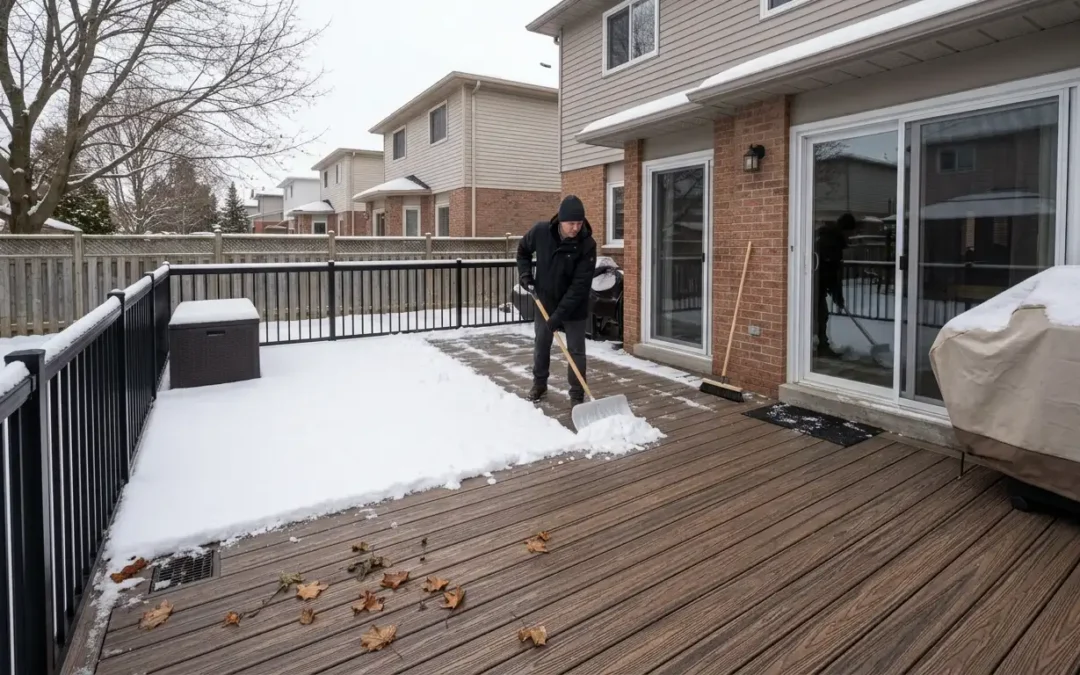
Winter is where composite really earns its keep, but how you clear snow and ice still matters. The goal is to remove snow without gouging or scratching the boards, and to melt ice without using products that damage the surface. A few practices protect the deck through the cold months:
- Shovel with a plastic-bladed shovel rather than metal, which can scratch or chip
- Shovel parallel to the board direction to avoid catching board edges
- Leave a thin layer of snow rather than scraping right down to the surface
- Use calcium chloride rather than rock salt to melt ice, as it is gentler on composite
- Avoid metal snow blades and ice chippers directly on the deck
It helps to check the manufacturer’s guidance on ice-melt products, since some recommend specific formulations. Sand can also add traction without any chemical risk. Handled this way, a well-built outdoor living ottawa deck stays safe underfoot all winter without any harm to the boards.
When Winter Reveals a Repair
Sometimes spring thaw exposes an issue that maintenance alone cannot fix, a loose board, a wobbly railing, or movement in the deck frame. These are structural matters rather than surface care, and they are worth addressing before the busy season. This is where professional deck construction ottawa and repair expertise comes in, since the framing and fasteners beneath composite boards are subject to the same freeze-thaw forces as any deck. Catching and correcting these early, often as part of a broader exterior renovation ottawa or home improvement ottawa plan, keeps the whole structure sound for the long haul.
Investment Returns
A composite deck is a lasting outdoor investment, and keeping it clean and structurally sound protects both your enjoyment and your home’s appeal to future buyers. With over 25 years of Ottawa expertise, we build and maintain decks made to endure our seasons. Ready to talk about your deck? Contact us at (613) 263-3513 for a free consultation.
Recent Comments